.png)

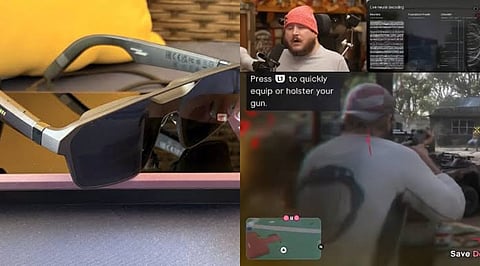
A Neuralink clinical trial participant has demonstrated how he can play Grand Theft Auto 6 using imagined movements rather than a physical controller. A video shared on social media shows the unnamed participant using the brain-computer interface (BCI) to operate a PlayStation 5 controller through thoughts.
Researchers mapped different imagined movements to controller inputs. Thinking about tapping his ring finger activated the square button, while imagining sliding his right hand forward pulled an aircraft’s nose up. The participant also mentioned a foot-linked control, although its function was unclear.
The participant said he previously relied on a mouth stick and an iPad to use a computer and play games. He described the experience as being “like a bird just pecking at an iPad”, adding that it made his jaw sore.
“Before the … chip and surgery, I was using a mouth stick and an iPad,” he said. After receiving the implant, he said, controlling a computer gave him his “portal to the world” back.
The demonstration highlights how brain-computer interfaces could help people with limited mobility access digital devices and entertainment.
Also Read: Musk's Neuralink Hits Milestone: Ninth Patient Gets Brain Chip Implant
Neuralink implanted its first device in January 2024. The first participant initially used it to move a computer mouse with their thoughts. As users became comfortable with basic computer controls, some moved on to gaming.
Within months, reports emerged of participants playing turn-based titles such as chess and Civilization VI. By August 2024, the second Neuralink recipient was reportedly playing Counter-Strike 2 and described the experience as ‘insane.’
The report says people are now using brain-computer interfaces to play more complex games, including World of Warcraft and GTA 6. The clip shows the technology being used for more than basic computer tasks.
Neuralink is also developing Blindsight, a technology intended to restore sight to blind people. Elon Musk has said the system is ‘ready from an engineering standpoint.’ The company is waiting for regulatory approval before beginning human trials.